
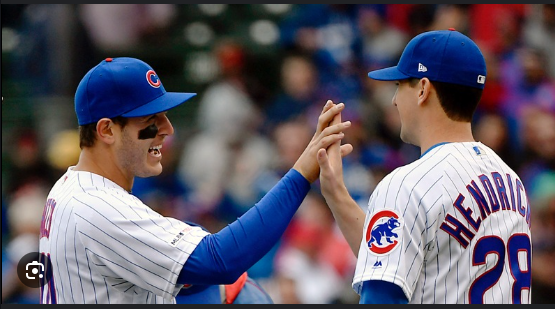
The Epstein/Hoyer Rebuild – Year 1
The Lou Pinella/Jim Hendry era was highlighted by regular season success and playoff failure. 2007 and 2008 brought NL Central victories, followed by quick 3-game sweep defeats in the NLDS.
But the team get progressively worse from 2009 to 2010 (when Pinella was fired) to 2011. So, the reins were handed over to Theo Epstein and Jed Hoyer in September of 2011. Epstein had been the wizard who broke the “Curse of the Bambino” in Boston, bringing two world series titles the previous decade.
They say it’s always darkest before the dawn, and that was definitely true for the early days of the Epstein era, as it was dark. Year year before he arrived the Cubs had 91 losses. They followed with 101 losses in 2012, 96 in 2013, and 89 in 2014 — all last place finishes in the Central. To compare that to the more recent “rebuild” of 2021 to 2023, the Cubs had 91 losses, 88 losses and 79 losses, finishing 4th, 3rd and 2nd.
But Epstein wanted to truly rebuild the organization from the ground up. And part of the thinking included losing games to get better draft picks. 2012 wasn’t great, as the picks were Albert Almora, Paul Blackburn and Pierce Johnson. But in 2013 the got Kris Bryant, 2014 brought Kyle Schwarber and 2016 Ian Happ.
But the next few posts in this series is around how they rebuilt the team with trades
Date: December 8, 2011
Cubs trade: DJ LeMahieu (16.6) and Tyler Colvin (1.1)
Rockies trade: Casey Weathers (n/a) and Ian Stewart (0.0)
WAR comparison: Rockies 17.7 – Cubs 0.0 (Cubs -17.7)
Intangibles: None
Analysis: The first trade may have been the worst they ever made. DJ LeMahieu turned into an all-start 2nd baseman, and Stewart played sparingly before being released. Weathers never made it to the majors. Colvin did not produce too much for the Rockies, but he didn’t have to. o be fair, LeMahieu had done little to indicate the player he would be, as the story about the trade revolved around Colvin and Stewart.
https://www.espn.com/chicago/mlb/story/_/id/7333696/chicago-cubs-trade-tyler-colvin-dj-lemahieu-colorado-rockies-ian-stewart-casey-weathers
Date: December 23, 2011
Cubs trade: Sean Marshall (1.1)
Reds trade: Dave Sappelt (0.3), Ronald Torreyes (n/a) and Travis Wood (5.6)
WAR comparison: Cubs 5.9 – Reds 1.1 (Cubs +4.8)
Intangibles: Marshall had an excellent season in 2012, helping the Reds get to the playoffs, and pitching in the NLDS, which the Reds lost. Injuries limited him to 10.1 innings in 2013, but he was back for the wild card game, which the Reds also lost. Travis Wood pitched in 15 playoff games for the Cubs out of the bullpen in 2015 and 2016. Plus he had an amazing catch in left field.
Analysis: This one was a big win for the Cubs. Marshall had become an extremely effective setup man, after mediocre results as a starter. But after one good year with the Reds, injuries ended his career. Wood had 5 solid seasons with the Cubs, as a starter for 3 years, and then moving to the bullpen when they had better options.
https://www.espn.com/chicago/mlb/story/_/id/7383879/chicago-cubs-trade-sean-marshall-cincinnati-reds-travis-wood-others
Date: January 5, 2012
Cubs trade: Carlos Zambrano (0.7)
Marlins trade: Chris Volstad (-1.5)
WAR comparison: Marlins 0.7 – Cubs -1.5 (Cubs -2.2)
Intangibles: Cubs were shedding salary (but still had to pay most of Zambrano’s check), and got very little in return.
Analysis: Just a bit sad to see Zambrano go. 2012 was his last year in MLB, and it might have been nice to see him finish as a Cub. But he had walked off the field the previous season.
https://www.espn.com/chicago/mlb/story/_/id/7425259/chicago-cubs-trade-carlos-zambrano-miami-marlins
Date: January 6, 2012
Padres trade: Zach Cates (n/a) and Anthony Rizzo (37.1)
Cubs trade: Kyung-Min Na (n/a) and Andrew Cashner (3.2)
WAR comparison: Cubs 37.1 – Padres 3.2 (Cubs +33.9)
Intangibles: Rizzo received a decent contract extension while with the Cubs. Cashner was part of a mega-deal that brought the Padres Luis Castillo and Josh Naylor from Florida. Although, they traded Castillo back to the Marlins for Colin Rea, who had been part of the previous deal. And before Naylor could provide them any value, they traded him and 5 others to Cleveland for Greg Allen and Mike Clevinger (who provided a total of 1.3 WAR for San Diego). Meanwhile, Rizzo was a key cog in the Cubs’ successes from 2015-2020.
Analysis: The eventual value of this trade was about double what the Cubs had lost in the LeMahieu trade. Hoyer and Epstein had always like Rizzo in the minors, and we know what happened next.
https://www.espn.com/chicago/mlb/story/_/id/7432801/chicago-cubs-acquire-1b-anthony-rizzo-san-diego-padres-andrew-cashner
Date: April 21, 2012
Cubs trade: Marlon Byrd (-0.2) and cash
Red Sox trade: Michael Bowden (0.8) and Hunter Cervenka (n/a)
WAR comparison: Cubs 0.8 – Red Sox -0.2 (Cubs +1.0)
Intangibles: None
Analysis: A relatively uneventful trade, as Byrd did not contribute much to the Red Sox. Although Bowden pitched in about 60 games over 2 losing seasons. Byrd went on to contribute almost 12 WAR to multiple teams, while Bowden bounced between Japan, Korea, the Mexican league, Independents leagues and several minor league teams.
Date: July 30, 2012
Cubs trade: Reed Johnson (-0.4) and Paul Maholm (0.1)
Braves trade: Jaye Chapman (0.1) and Arodys Vizcaíno (0.0)
WAR comparison: Cubs 0.1 – Braves -0.3 (Cubs +0.2)
Intangibles: Combine the first name of one player the Cubs received with the last of the other and they really would have had someone. The Braves got Johnson for a playoff run, but they lost in the WIld Card in 2012 and he only had 3 ABs in a 3-1 series loss to the Dodgers the following year after signing a free agent deal. Maholm did not pitch in the postseason. Vizcaino barely pitched for the Cubs after recovering from injury, but he was flipped back to the Braves for Tommy LaStella.
Analysis: A deadline deal did not do much for either team. Not having Maholm on the payroll was probably good for the Cubs, and Vizcaino did provide them with a future trade chip.
Date: July 31, 2012
Cubs trade: Ryan Dempster (0.2) and separately Geovany Soto (0.8)
Rangers trade: Kyle Hendricks (22.1) and Christian Villanueva (n/a) and separately Jake Brigham (0.0)
WAR comparison: Cubs 22.1 – Rangers 1.0 (Cubs +19.2)
Intangibles: A deadline deal where Texas lost in the Wild Card game, and for 12 starts from Dempster, they lost years of Kyle Hendricks – who pitched in 12 postseason games for the Cubs. Hendricks did sign an extension with the Cubs, but most of the value he provided was before the new contract. Geo Soto had a pretty good year in 2013 after signing a new deal with the Rangers, before being sold to the Athletics the following season. Jake Brigham never pitched for the Cubs.
Analysis: Two separate deals, one of which was another huge win for the Cubs front office, finding the unsung prospect gem in the Rangers system. He started many key games for the Cubs, including the clinching games in the NLCS and World Series in 2016.
Date: August 5, 2012
Cubs trade: Jeff Baker (-0.4)
Tigers trade: Marcelo Carreno (n/a)
WAR comparison: Cubs 0.0 – Tigers -0.4 (Cubs +0.4)
Intangibles: The 2012 Tigers managed to get all the way to the World Series before being swept by the San Francisco Giants, but Baker provided very little help. He got a -0.4 WAR in only 15 games, with a slash line of .200/.243/.257 and a 35 OPS+. He had no postseason at bats.
Analysis: Remember post-deadline waiver trades? That’s about the only interesting thing about this swap — other than the Cubs acquiring Baker from the Rockies in 2009 for Al Alburqueque. Has any other player had 2 q’s in their name? By getting Baker off their roster, they saved .4 wins, so the trade was a win despite Carreno never playing in the majors.
Current Scorecard:
Gained WAR: 64.5
Lost WAR: 23
NET: +41.5
Quick update on the Tucker Trade: Isaac Parades went on a power serge, and is up to a 0.7 WAR. Kyle Tucker has slowed down, so the tally right now is Cubs 1.2 – Astros 0.7 (still a 0.0 for both Cam Smith and Hayden Wesneski)
 Cubs in 7
Leave a reply to Who Won the Trade? Part 3 – Cubs in 7 Cancel reply